
Water Balance and Sub-Meter Consumption Report
Water balance compares the inlet volume of the facility with the volumes at designated usage points within a common period and scope. The difference is the beginning of the research; It cannot be presented directly as a leakage rate. Meter errors, tank level changes and unmeasured lines affect the result.
Determining the measurement limit
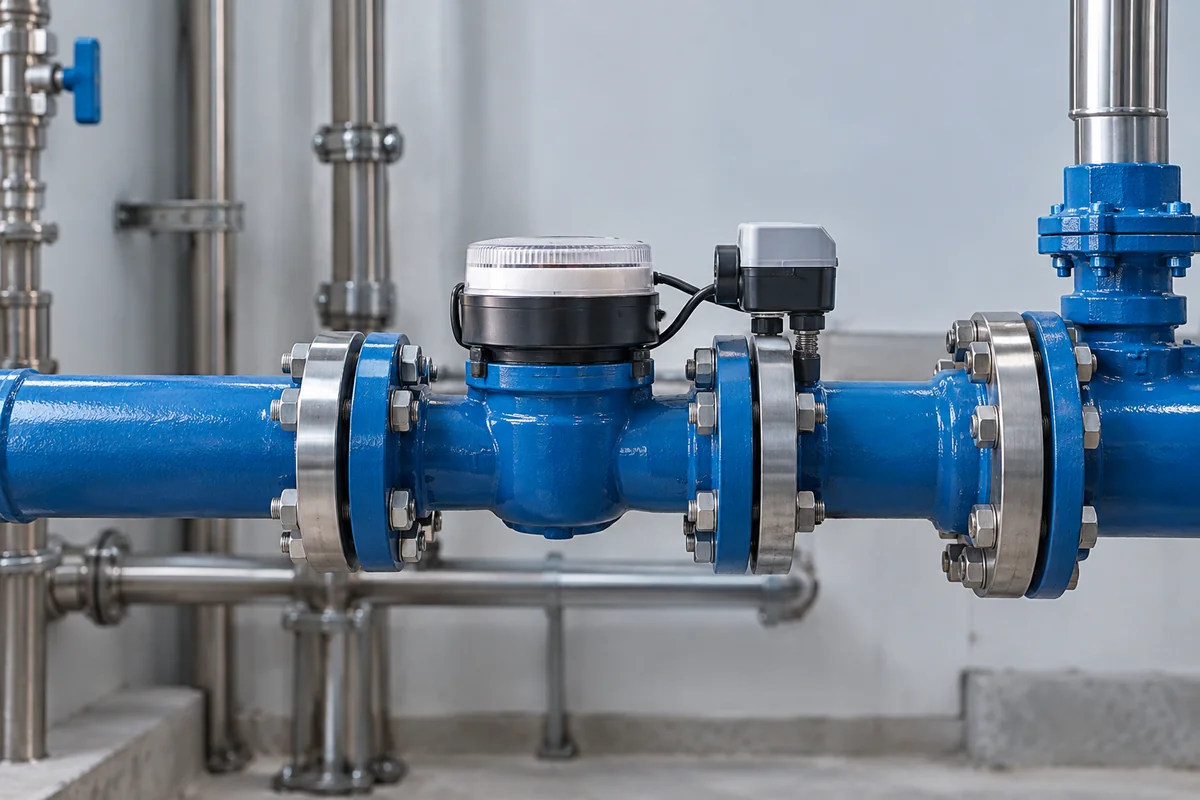
Network input, well, tanks and reuse lines are shown in the diagram. Usage areas such as kitchen, laundry, garden and pool can be metered separately. Since water entering and leaving the tank may occur at different times, tank volume change is taken into account in the period calculation. Periods must be mapped so that the subcounter total can be compared to the main counter.
Example calculation and uncertainty
If the main inlet is 1,000 m³ and the measured sub-consumption is 900 m³ in the same period, the difference to be explained is 100 m³. This does not mean that there is 10 percent leakage. Unmetered usage, meter sensitivity and tank change are checked. When converting from liters to m³, the relationship 1 m³ = 1,000 liters is used; The unit of the data source is kept unchanged.
Turning the report into a business decision
Episode consumption is compared per day, per week or per unit of activity. Guest-night in hotels; Denominators such as product quantity can be used in production. If there is missing data, it is clearly marked in the report. It can support the measurement data management system in ISO 46001 studies; tracking software alone does not provide documentation.
Technical questions and answers
Does the water balance directly give the leakage rate?
No. Measurement and operational sources of the difference should be investigated.
Will the account change in the warehouse facility?
Yes. The volume change in the warehouse is considered together with the period scope.
Can meters be read at different intervals?
Comparison requires time matching or appropriate period aggregation.
Should missing data be considered zero?
No. Incomplete registration must be distinguished from actual zero consumption.