
Custom Electronic Card: From Prototype to Mass Production
Special electronic card development creates a product suitable for mechanical field, input-output, power, communication and production conditions. Just because the prototype works does not mean it is ready for mass production. Repeatable testing and production files need to be verified.
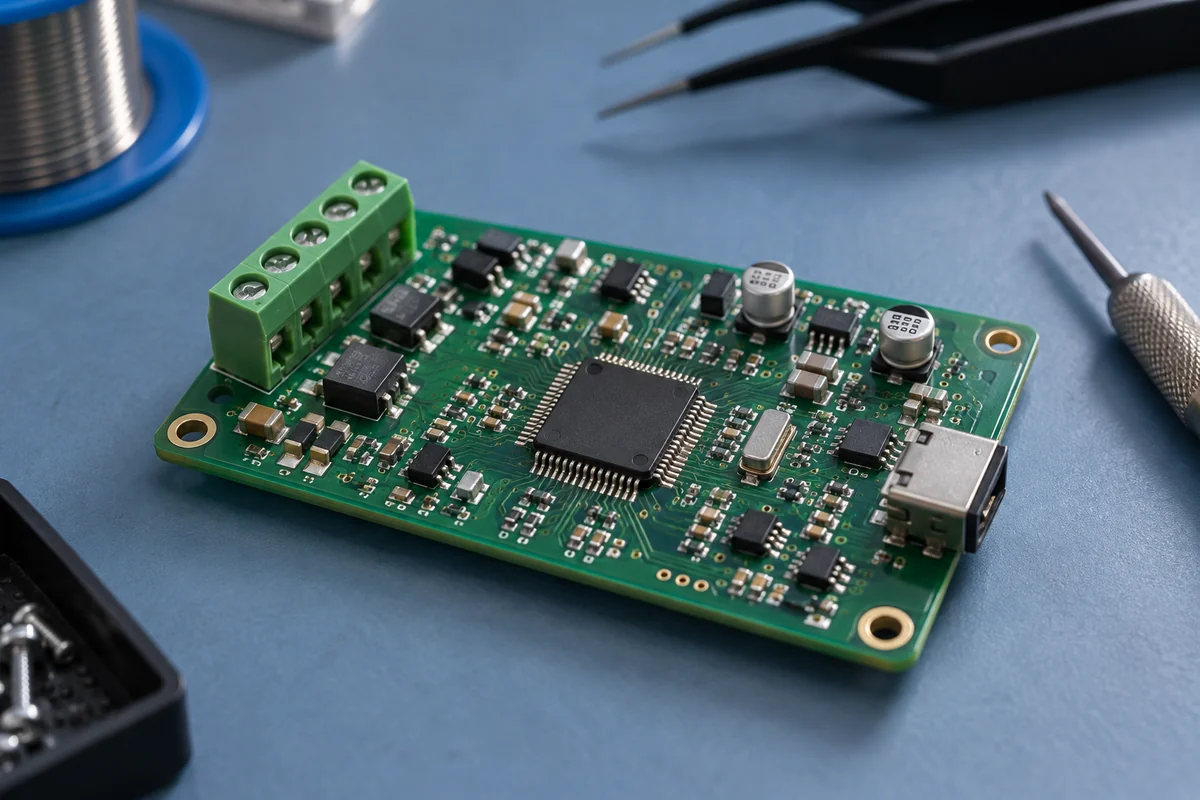
Requirements and design limits
Supply voltage, loads, environmental temperature, interfaces and mechanical measurements are recorded. The supply status and alternatives of critical components are evaluated during design. EMC and electrical safety objectives are determined by the use of the product; No claim of conformity or certification can be established without testing.
DFM/DFA and test access
Card layout is reviewed according to the manufacturer's track width, hole, paneling and mounting limits. Test points, programming connection and functional test fixture are planned before production. The assembly steps SMT and DIP and the machining conditions of precision components are described in the production plan.
Verification and delivery files
Schematics, PCB production files, bill of materials, assembly drawing and software version are managed together. Revision control, initial production approval and traceability help verify that the same product is produced in mass production. Source file ownership, testing scope, and maintenance responsibilities are decided at the proposal stage.
Technical questions and answers
Can the prototype be put directly into mass production?
Manufacturability, testing and revision verification must be completed.
Is DFM the same as DFA?
DFM addresses manufacturability, DFA addresses ease of assembly.
Is the CE sign given when the card is activated?
No. Relevant product legislation and conformity assessment are required.
Does component replacement affect the software?
Electrical and functional equivalence must be verified; Software and testing are updated if necessary.